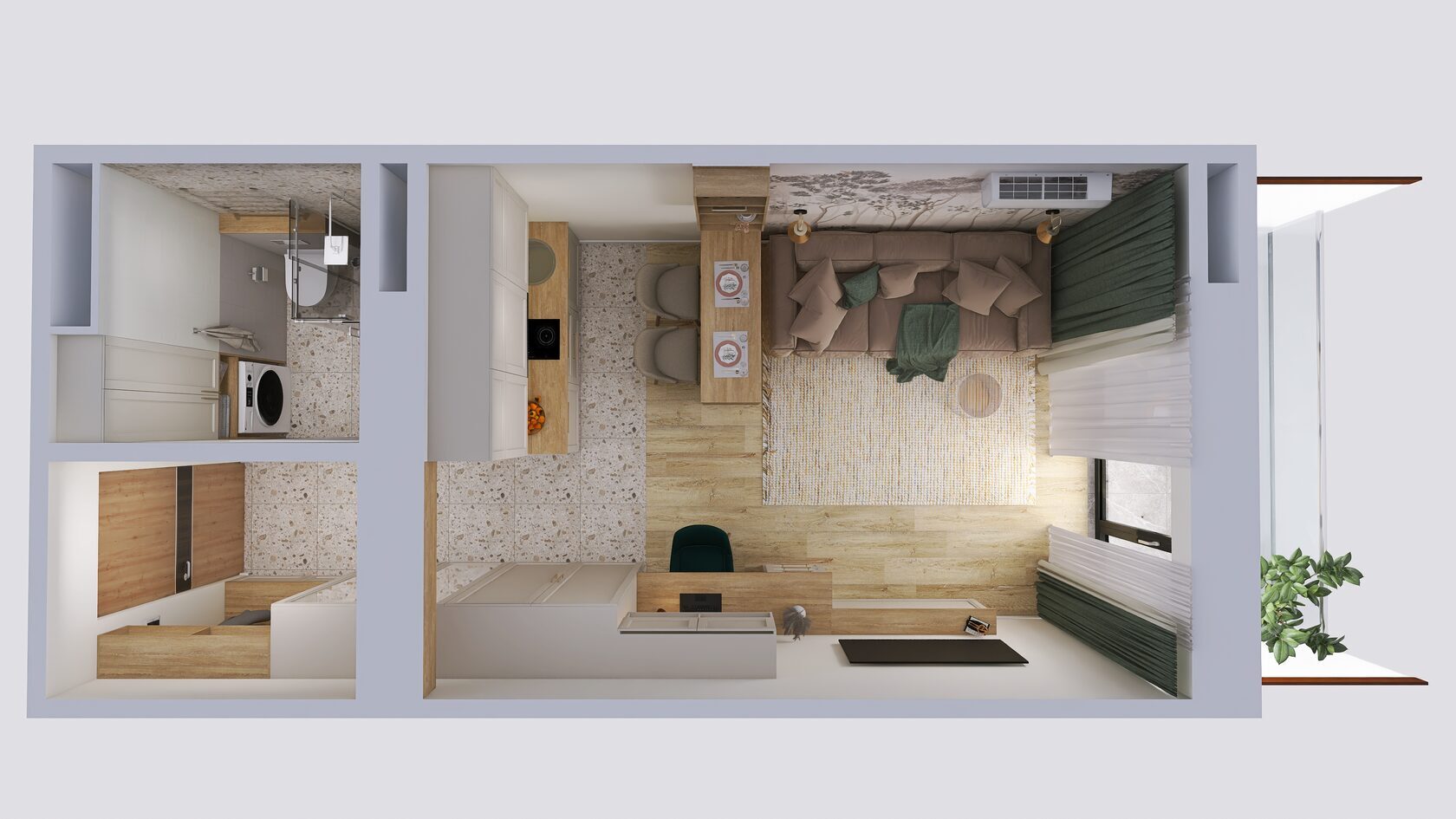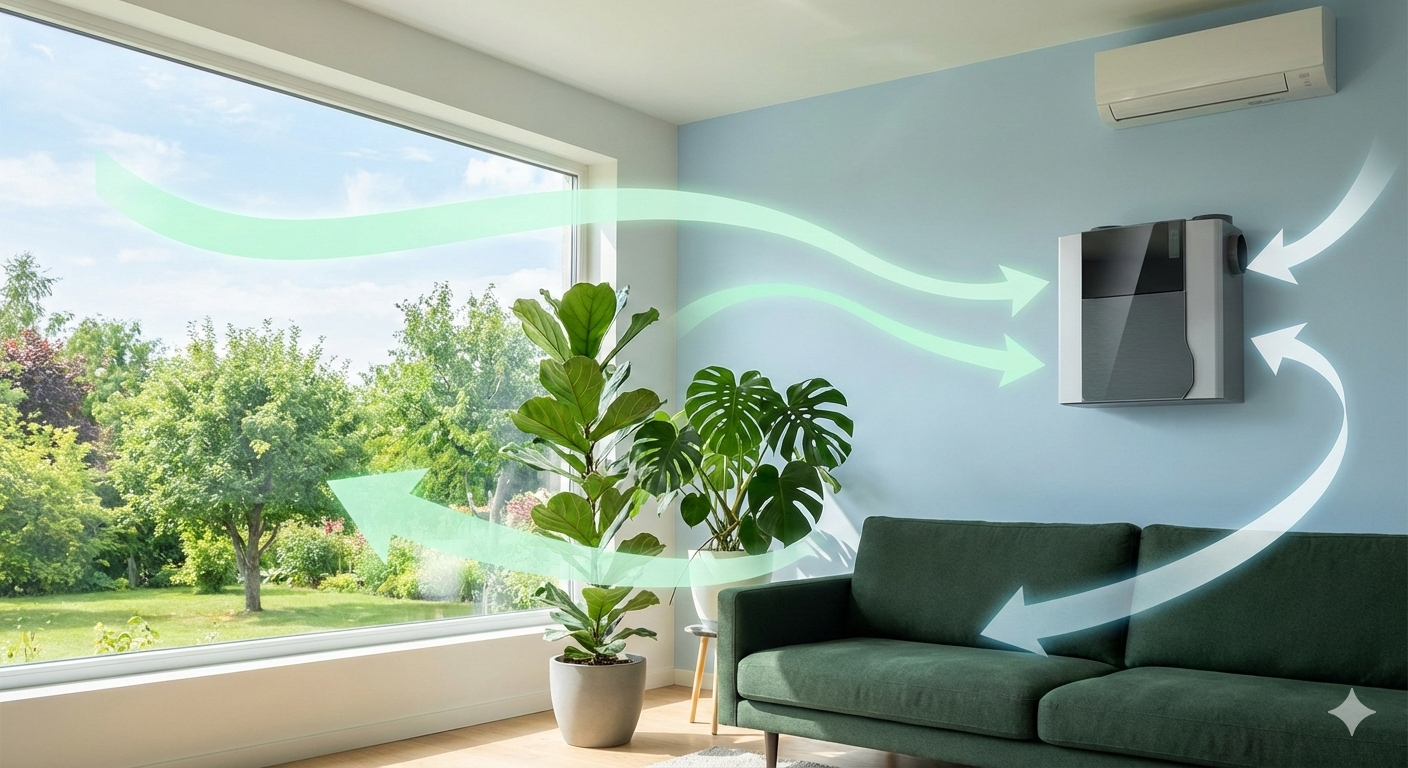
Georgia is a unique country with varied climates: the humid sea air of the coast; the harsh mountain climate with plenty of snow and frost in winter and comfortable, not-too-hot summers; and the heat of the capital. In summer in Tbilisi, when it is +35°C outside, it is pleasantly cool indoors without draughts from the air conditioner. In winter in Batumi, during the damp, cool months, the rooms are warm and dry and the windows don’t “weep”. And in the kitchen, after cooking your favourite dishes, the smells disappear in minutes without soaking into the sofa upholstery and curtains.
Imagine a home where it is easy to breathe in any weather. That is not magic but the result of a well-designed ventilation system. It is the invisible lungs of your home, the basis for your family’s health, the longevity of the renovation and true comfort. At KStudio we are convinced that ventilation should be designed alongside the interior. This makes it possible to integrate equipment (which often needs space under the ceiling) aesthetically and functionally, avoiding bulky boxing and lost centimetres of height later on.
Our building services specialist explains the types of ventilation for a private house or apartment in detail, with special attention to our Georgian climate conditions.
Types of ventilation: which system “breathes” for your family?
There are the following types of ventilation (for residential spaces):
• supply;
• extract;
• supply and extract;
• with heat recovery;
• with air conditioning/humidification/dehumidification.
Let’s look at the main options, their strengths and the problems they solve.
Supply ventilation
A system that forces fresh, pre-filtered outdoor air into the rooms
Advantages
Provides a constant supply of oxygen, especially relevant with airtight double glazing. Fights stuffiness.
Limitations
Does not remove polluted air by itself. Pressure in the room rises, and air is pushed out through extract ducts (for example, in the kitchen and bathroom) or gaps.
Climate specifics
In Tbilisi in summer the supply air must be cooled (combined with an air conditioner). In Batumi in winter it must be heated so as not to let in cold dampness.
Extract ventilation
Actively removes odours, moisture and pollution at their source
Advantages
Effectively solves local problems: removes steam from the bathroom, smells from the kitchen and excess moisture from the laundry.
Limitations
Does not supply fresh air. Creates negative pressure, compensated by inflow through windows (with draughts and dust) or from other rooms.
Climate specifics
Critically important in Batumi bathrooms for fighting mould. In a Tbilisi kitchen in summer it removes not only smells but also excess heat.
Supply and extract ventilation
The most effective and balanced option, with two independent systems: one supplies air, the other removes it
Advantages
Full control over air exchange. You can set the exact amount of fresh air for each room.
Limitations
More complex and costly installation; requires professional calculation.
Climate specifics
The best solution for modern energy-efficient homes. In summer it can distribute air cooled by the air conditioner evenly to all rooms, and in winter — warmed air.
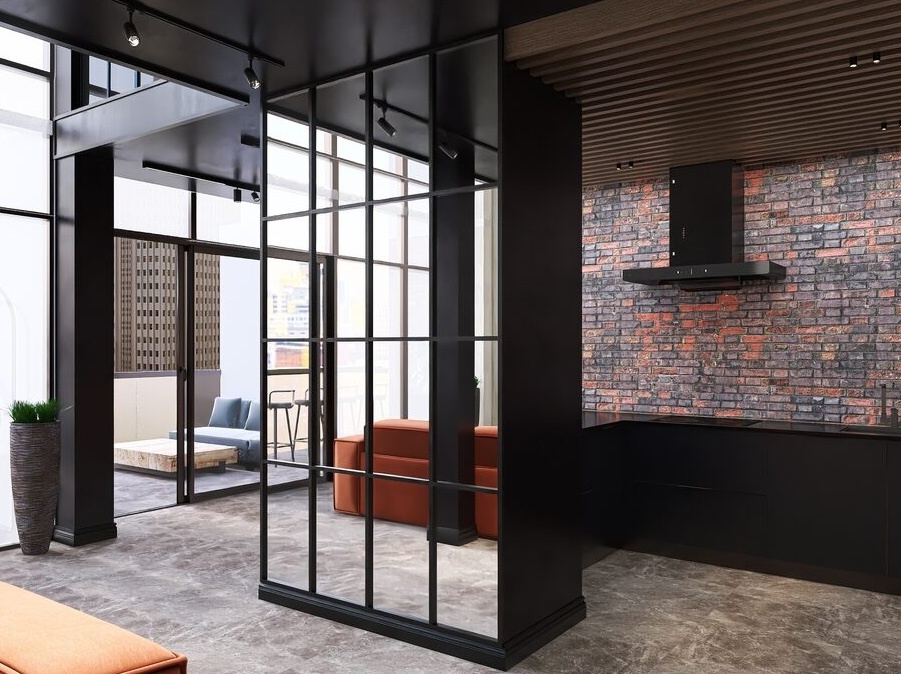
We are implementing this solution on our LOFT project.
In this apartment we implemented supply and extract ventilation — a solution ideally suited to two-level spaces with high ceilings.
That is why such systems must be planned at the design stage, not “added later”.
You can watch our short video by clicking the button below
What determined our choice?
What we focused on first when we chose the supply-and-extract principle
Vertical air exchange
The system’s task is not simply to mix the air but to create controlled flows so that fresh air also reaches the upper zone, creating the ideal climate at every point in the space.
Industrial aesthetics
The system doesn’t have to be hidden — it can be integrated into the design: spiral-wound ducts in copper or galvanised steel; runs along columns or exposed beams; designer grilles and diffusers.
Separation into private and shared zones
Creating negative pressure in the “dirty” zones on the ground floor and running separate supply lines to each room on the first floor
Open-space acoustics
The equipment (ventilation units) must be low-noise or placed in a plant room (for example, in the walk-in wardrobe or under the stairs). Ducts must be sound-insulated.
Heat recovery — the key recommendation
A supply and extract system with a heat recovery unit (preferably with a bypass for the warm season) will save energy by warming the supply air in winter with the heat of the extracted air, and will pay for itself quickly.
Smart zoning of air flows
Using automation and zone dampers lets the system work zone by zone rather than on the whole loft volume at once: at night the supply to the living room is reduced, while in the bedrooms it is maintained.
Supply and extract ventilation with heat recovery (heat exchanger)
A smart system in which extract and supply air meet in a heat exchanger without mixing. In winter heat from the outgoing “dirty” air is transferred to the cold incoming air. In summer it is the other way round: coolness from the air-conditioned room air cools the hot incoming air.
Advantages
Savings of up to 70–80% on heating and cooling. You get fresh air at a comfortable temperature.
Limitations
High initial equipment cost. Requires regular maintenance (filter replacement).
Climate specifics
Ideal for Tbilisi with its contrasting seasons. Pays for itself in a few seasons. In Batumi it rescues you from damp, warming the supply air without big costs.
Ventilation with air conditioning, humidification and dehumidification
A climate system in which the supply air is not only filtered but also brought to ideal temperature and humidity.
Advantages
Absolute climate comfort. A solution to every problem.
Limitations
The most complex and expensive system. Needs space for the equipment (often in a separate plant room).
Climate specifics
Provides coolness in summer and warmth in winter in Tbilisi.
In Batumi it removes excess humidity, protecting the home from mould in winter, and humidifies air dried out by the air conditioner in summer.
Focus on the key zones!
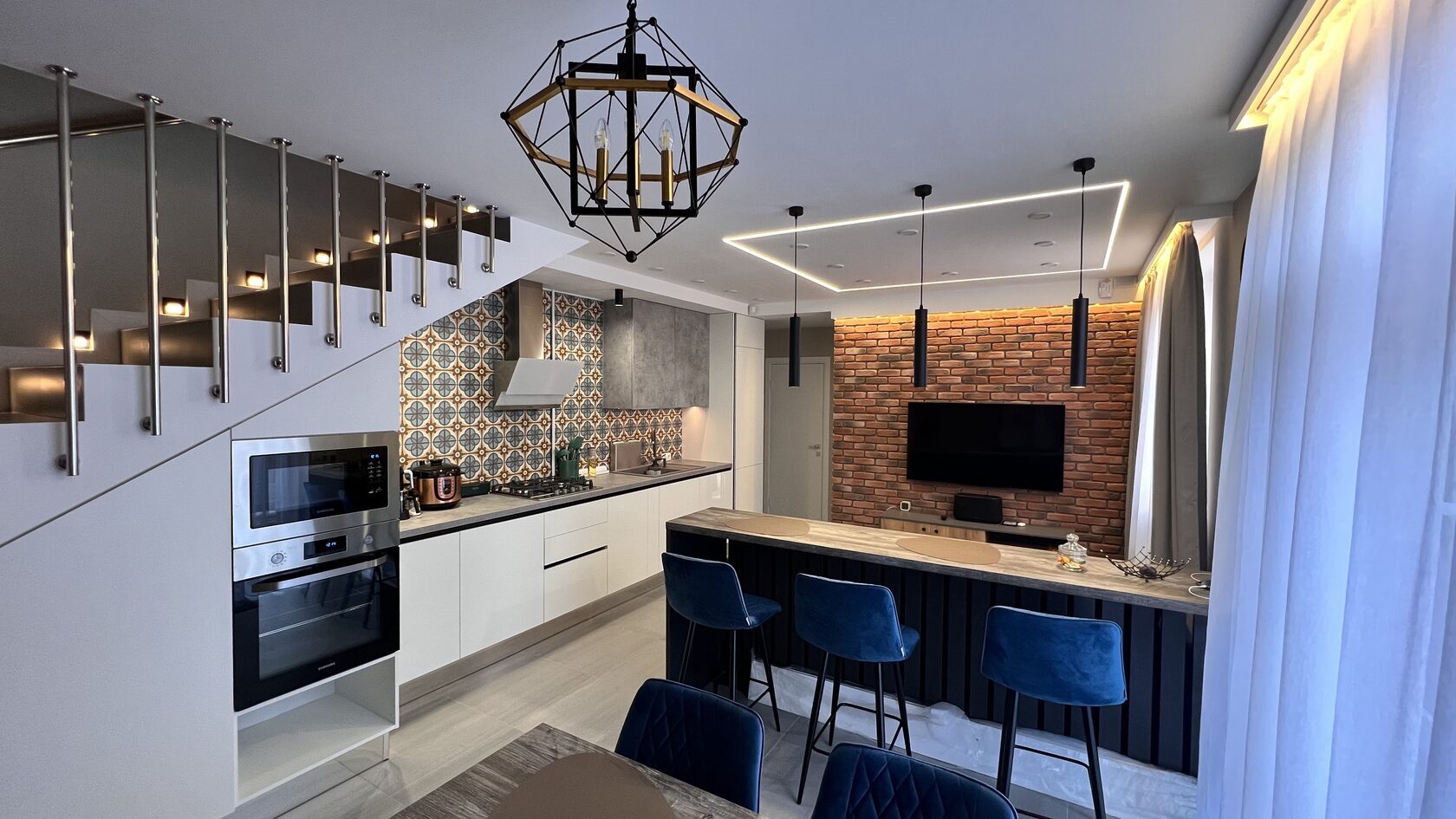
Kitchen
These are the “lungs” of the home: a powerful extract zone over the hob, integrated into the overall supply and extract system, is a must here. It is a question not only of comfort but of safety: effective removal of combustion products, grease and moisture.
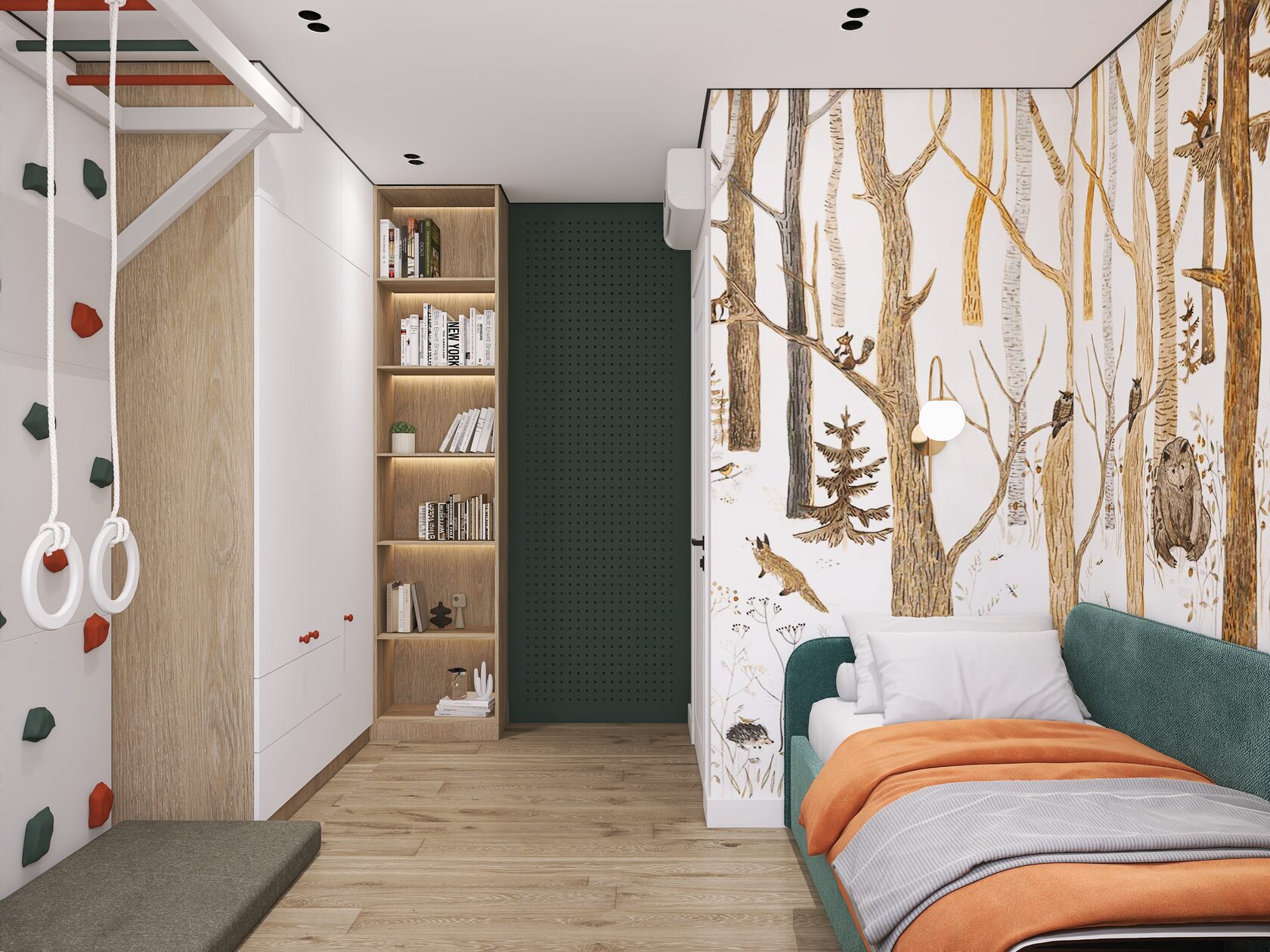
Children’s room and bedroom
These are health zones: in rooms where we restore our strength, a constant supply of fresh, clean and silent air is critically important. We design separate supply lines with a night mode (minimum noise) and enhanced filtration. This is especially important for building a child’s healthy immunity.
Before you start thinking about renovating or reconstructing your apartment or house, it is very important to think about ventilation. Within the hot concrete walls of Tbilisi or on the humid coast of Batumi, the climate of your home will depend not only on the goodwill of its inhabitants but also on the right choice of ventilation system.
Our task at KStudio is to turn this into a technically flawless
and aesthetically impeccable project.
Trust us to create an atmosphere in which your family
can breathe easily. In any season.
KStudio: design that breathes.